
Big Ideas, Real Impact.
〰️
Big Ideas, Real Impact. 〰️
Driven by curiosity and built on purpose, this is where bold thinking meets thoughtful execution. Let’s create something meaningful together.
“I never had a mental health diagnosis, but about 2 months after I had my first child, I had extreme feelings of suicidal ideation. It was all I could think about. I felt compelled to commit suicide. Luckily I mentioned this to my husband and we went to see a doctor - I was prescribed my first anti-depressant and the thoughts went away. I am now an RN and 1 year away from graduating as a Psych Mental Health NP. My hope is to somehow help mothers postpartum and bring more education and light to the struggles women may experience after childbirth.”
— Anonymous

“I had postpartum anxiety/depression with my firstborn. I tried to take him for a walk once. It was the first nice/walkable day since he was born (he was born in December). He was about three months old at the time. I think I needed the fresh air more than him. He cried the entire walk. I had to turn around and go home. When I got home, I took him out of the stroller bassinet, put him in the pack and play, and I threw the empty bassinet across the room. It was so scary.”
— Anonymous
“When I had my first baby, I was a teenager, and I don’t think I recognized the feelings of PPD or PPA; hindsight is 20/20. I cried every day and was constantly anxious. With time, things were okay. With my 2nd baby with my fiancé years later, I began having unbearable panic attacks in the 3rd trimester with no trigger. Everything was perfect; I was getting my little family. After giving birth, I never received a formal diagnosis. I felt like I was the only one who could properly care for my baby, and leaving her with anyone, even in another room, left me with anxiety. If other people held her, I could visually see them not supporting her head, and her neck snapping. I was very controlling of everything that had to do with her. This subsided around her 1st birthday. My 3rd baby was a tough pregnancy: high-risk preeclampsia and bed rest with a toddler. My anxiety attacks were back in full swing, so much so that I frequently begged my mom to spend the night so I wasn’t alone while my fiancé was at work. I was induced at 37 weeks, and the birth was traumatic; my placenta was abrupt after 24 hours in labor, and no one caught it. He was born quickly after that, by the grace of God, but still blue and purple and did not cry. He made a noise while he was breathing, and I was dismissed by several postpartum nurses. I thank God for the nurse on my 2nd night who believed me, and he was observed in the nursery and brought to the NICU within the hour. I was forced to be discharged, and a lot of scary things happened with him, and I got worse every day. I thought it would stop when he came home, but he wouldn’t nurse, and every formula made his stomach churn. He was either constipated or having diarrhea, and I was constantly making sure he was breathing. He had a long witching hour at night, and I thought in those moments he hated me and wanted to be back at the NICU…”
“I was pregnant with my first baby when I first heard the news about Cora, Dawson and Callan. The story was so heartbreaking and painful to hear but it stuck with me. 4 months after my daughter was born I wasn’t getting sleep and having terrifying intrusive thoughts and I immediately remembered your family and the next day found a psychiatrist. So I wanted to say thank you for speaking out. It gave me the courage to seek help.”
— Madison
“After I had my 2nd child, I felt like it was unsafe for me to be alone with her. I felt such overwhelming anxiety that I didn't know if I could take care of her, I was worried I might hurt her. I had lots of help from family, but I was honest with my husband about how I was feeling and he made sure that I was never alone. After a few days, the thoughts and feelings subsided and I felt more normal - but I can only imagine how difficult it would be to live months and months with those feelings. My heart goes out to every Mom and family struggling with postpartum symptoms.”
— Anonymous
“There was a long period of time when I couldn’t function and didn’t want to be here anymore at all, but I just had to fight very hard to stay. It was all a very long, hard road to get to where I am today with an 8-, 6-, and 4-year-old. I absolutely love and adore them and am so grateful to be a mother. I just want to say that motherhood has been a beautiful and messy ride, but so worth it.”
— Kadi B.
“…Over time, I fell apart inside. I had to go back to work but was anxious all day, and it didn’t subside when I got home. Then came rage, but it was directed at my support system. I got angry at everything with my mom, mom-in-law, and fiancé. Then came the intrusive thoughts about suicide. Intrusive thoughts: “What if I drop my baby and he dies”… things of that nature. Again, I didn’t want to be left alone because I knew I didn’t want to kill myself, but I was scared I would. I also did not want to tell anyone, fearing my kids would be taken. I privately sought help, and the psychiatrist really did care; he also had a lot of experience. He assured me this is normal for a lot of women and prescribed me a medication. I don’t know what it was, but within a week everything was worse, and I couldn’t even function at work. He immediately had me stop and prescribed something else, and things slowly got better. I had one to address my mood and one for panic attacks. He was on me to get a therapist too. I stayed on until I felt like me again, it made me feel very hungry and I gained 40lbs and I didn’t care because my mental health was my priority'. This was 8 years ago, and it made me never want to experience pregnancy ever again. A lot of my son's infancy is blacked out, and that kills me, but despite how I struggled, I took tons of pictures and videos. NO ONE knew I was struggling the way I was, not to the extent that I was. If I hadn’t gotten help, it terrifies me to think about what could have happened. I got lucky that I found my psychiatrist, but I know not every woman is that lucky. If you're struggling, it’s okay. You will make it through. It’s okay if you have to be on medication. Some of our brains and hormones react much differently than other women, and that’s okay!!!!! You will get through this.”
— M.P.
“Those years were horrifically difficult navigating the mental healthcare nightmare that exists in the US. I’m honestly not certain how I managed to make it to the other side but I did. But I know many other mothers do not.
— B. Sorenson
“Hello, my name is Alli, and I am a mother of 5: 4 on earth and one angel baby. Growing up, all I ever dreamed of was being a mom. I loved babysitting, worked as a nanny, and started as a therapist for children, specializing in the preschool population. In 2013, I had my first daughter. My pregnancy brought a few worries about her development and what it would be like to be up in the middle of the night, but also dreams of meeting my baby girl and what life would be like together. When she was born in April of 2013, my world turned upside down. I was mildly aware of perinatal mood and anxiety disorders and that the sleepless nights would be challenging but I was wildly unprepared for the turbulent storm of postpartum anxiety, OCD, and depression. My birth experience was traumatic, with a challenging recovery; she struggled with breastfeeding, and I spent countless hours pumping milk for others to feed her. My internal thoughts were scary, unlike myself, and crippling. I didn't sleep but somehow looked "ok" to the world. I smiled, attended the appointments, and answered the questions, then cried alone in the middle of the night, wondering if things would ever be ok. I ended up moving in with my parents hours away from home when my husband returned to work due to the fear that I could not be alone with this baby. I loved her completely, but I didn't feel like she was mine, and I didn't feel like I could do this on my own in any way. After a couple of months and my own return to work, the clouds slightly lifted and with my subsequent pregnancy appeared to be better than the first. When my second daughter was born, those same clouds came but morphed into intense fear of germs and the need to protect her from the world. My older daughter served as a helpful distraction from the depression but left alone with my new baby, I was crippled with fear and continued to complete rituals to keep her safe from any danger, sometimes thinking the biggest danger of all was actually me. I was pregnant again in the Fall of 2016 and lost my daughter in a second-trimester miscarriage. I was beyond devastated and finally sought help for my postpartum battles and the grief from this loss. I went on to have two more children, my boys, and was supported by therapy and a greater understanding of my needs and what I needed to do to take care of myself. With my 4th pregnancy, PTSD set in, and I was so afraid of losing this baby after I lost my daughter just months before. Every body ache, headache, cramp or sniffle became a rush to the emergency room and an immensely exaggerated thought that I would lose him too. It was not until I held him in my arms that I was able to actually process that trauma of the loss and how afraid I was of losing him. No one mentioned that perinatal PTSD could be at play until after he was born. With my final baby, he was born in Jan of 2020, and in a strangely warped way, COVID allowed me to be with him 24/7 with my husband and our other children at home with the goal of protecting them all from the world and though this certainly inflamed my perinatal OCD it also allowed me the space to be with him and know what we were all ok together.
I am a mom, a therapist, a perinatal mental health certified clinician, and a person with lived experience with postpartum depression, anxiety, and OCD. I suffered in silence, and the outside world thought I was ok. I did my best to look ok and to try to get through. i now sit here as an advocate to share my story and to hopefully help others not suffer in silence, know you are not broken, you are not alone, and you are not exempt from having a PMAD because you are in a helping profession, are a doctor, are a therapist, or should know better. We are all susceptible to PMADS, and some of us have greater risk factors, and there is support. My youngest child is 5 and a half years old, and though I am no longer in the official perinatal time period, I am still processing everything that I have been through and continue to experience. The support is ongoing and the healing process needs to continue. As I tell my clients, the journey from postpartum to parenting to existing as a person after becoming a mom is an ongoing process filled with so many experiences. With continued support, ongoing understanding of our own needs, and creating community with others, the healing process can lead to greater advocacy, letting our voices be heard, and helping those who come after us to know they are not alone and this is real, and you can continue to grow and thrive and be someone who is a voice for all who are unable to speak up about their struggles. Joining PSI, becoming the co-chair of our state board, focusing my practice on helping the perinatal population and those who experience loss, and serving as a support coordinator in our state to connect individuals with the help they need and deserve is my process of healing, and always will be.”
— Alli K.“I had postnatal depression 31 years ago, and it still haunts me. I had no sleep for months, became underweight, and l felt disassociated from myself, as if I was floating alongside, watching. I had terrifying urges to hurt my baby, which thankfully I was able to not act on; instead, I overdosed. Thanks to God, I woke up in hospital. I have been taking medication ever since and will never consider coming off it, as I’m terrified of returning to that place. I have grandchildren now and am grateful but haunted every day.
Please, if you feel like this, don’t be scared; seek help and take medication. This is more common than you’ll ever know; you will get better, and you will love your baby. Life is worth living.
These beautiful babies will help others to survive. Thank you for allowing me to share my story after all these years.”
— Anonymous
“ I have three children who are so very special to me. I struggled with debilitating mental health issues after my 2nd and 3rd child. I sought out a lot of help especially after my 3rd child. I had all 3 children close in age as well as two miscarriages. After my first child I felt okay but I did end up taking one medication to help. I ended up having the two miscarriages then my second child and things went downhill for quite sometime after my second baby. Once I felt a bit better again I had my 3rd and last baby. Things went even more downhill after that but I was able to get a lot of help through a psychiatrist, therapy and a mental health hospital stay. As well as my husband supporting me and staying close to God. There was a long period of time where I couldn’t function and didn’t want to be here anymore at all but I just had to fight very hard to stay. It’s was all a very long hard road to get to where I am today with an 8, 6 and 4 year old. I absolutely love and adore them and am so grateful to be a mother. I just want to say that motherhood has been a beautiful and messy ride but so worth it.”
— Kadi B.
When I became a mom, I expected the sleepless nights and the exhaustion. I didn't expect to lose myself.
After having my babies, I experienced postpartum depression and postpartum anxiety. My days were filled with sadness, worry, and a mental fog that made even simple things feel difficult. I constantly questioned whether I was doing enough or being enough. Along with the anxiety and depression came postpartum rage. I became overstimulated so easily. Small things felt enormous, and I would react in ways that didn't feel like me. The guilt afterward was overwhelming because I loved my children more than anything.
For a long time, I thought I just needed to try harder. I believed that if I were a better Christian, a better wife, or a better mom, I wouldn't feel this way. But I eventually learned that what I was experiencing wasn't a lack of faith or a personal failure. It was a real illness that deserved compassion and treatment.
Healing has looked like therapy, medication, honest conversations, and learning to accept help instead of pretending I was okay. I won't pretend that everything is perfect now. It isn't. I still have hard days. I still have moments when anxiety creeps in, or I feel overwhelmed. But I'm doing better than I was. I have more hope, more joy, and more peace than I once thought was possible.”
— J.M.
“After giving birth to my brother, my mom had a quick but strong urge to throw my brother out the window while she was driving. It went away quickly, but for some reason it happened and she definitely loved him and would have been destroyed had she acted on it. I myself had to to be hospitalized when my daughter was 6 months old because I was so depressed thinking I was a 'bad" mom and overthinking everything - like her sleep schedule - I thought I had permanently damaged her because I had not been following a sleep schedule. The stress was so much!”
— Hope
My suffering began with the birth of my second child. I now have three beautiful, wonderful young adult children.
My second baby was born in 2000. The anxiety and questioning of my worth and life choices began almost immediately after bringing my baby home. I remember sitting in the nursery nursing while uncontrollably sobbing that first night home with my toddler sleeping in the next room. The next FIVE years were spent in a blur of anxiety, therapies, medications, and hospitalizations. Nothing really worked - I was unrecognizable to myself and my family.
Those years were horrifically difficult, navigating the mental healthcare nightmare that exists in the US. I’m honestly not certain how I managed to make it to the other side, but I did. But I know many other mothers do not.
— B. Sorenson
“
“In November 2017, I was a postpartum nurse in Boston. I had just passed my boards as an Internationally Board Certified Lactation Consultant and gave birth to my only daughter, Eliza. Living in Boston was hard because we had no family there (we moved there because my husband had a postdoc fellowship at Microsoft), but we thrived for the first 6 months. I loved being a mom and had no signs of postpartum depression besides the normal baby blues. When I had to go back to work at 6 months to work the night shift, that’s when things changed. I accidentally and involuntarily started weaning because I could not pump often enough during my nursing shifts. I became withdrawn, had intrusive thoughts and compulsions, and would get set off by the smallest things when I had otherwise been a pretty easygoing gal before that. After my husband’s postdoc was finished, we moved back home to Maryland and things only got worse. I finally confessed to my husband and got treatment because I was constantly thinking I needed to remove myself from this life to protect my daughter from myself. I often had visions where I felt like I was on an island alone with her and other people couldn’t hear or see us and I was worried I was not able to protect my daughter on that isolated island. Later I would find out that my involuntary weaning triggered a hormonal shift that manifested as postpartum OCD.
As an IBCLC, I now know the hormonal effects of weaning from breastfeeding and struggling to keep up milk supply can lead to depression or even psychosis with certain risk factors. This is something I want to bring more awareness to as a mom who lived it and an IBCLC currently pursuing a degree as a WHNP. I didnt start to feel normal again until almost 2 years after my daughter was born. I wish more healthcare providers actually knew about the mental health effects of involuntary weaning and I hope my story helps someone out there and that they know theyre not alone.”
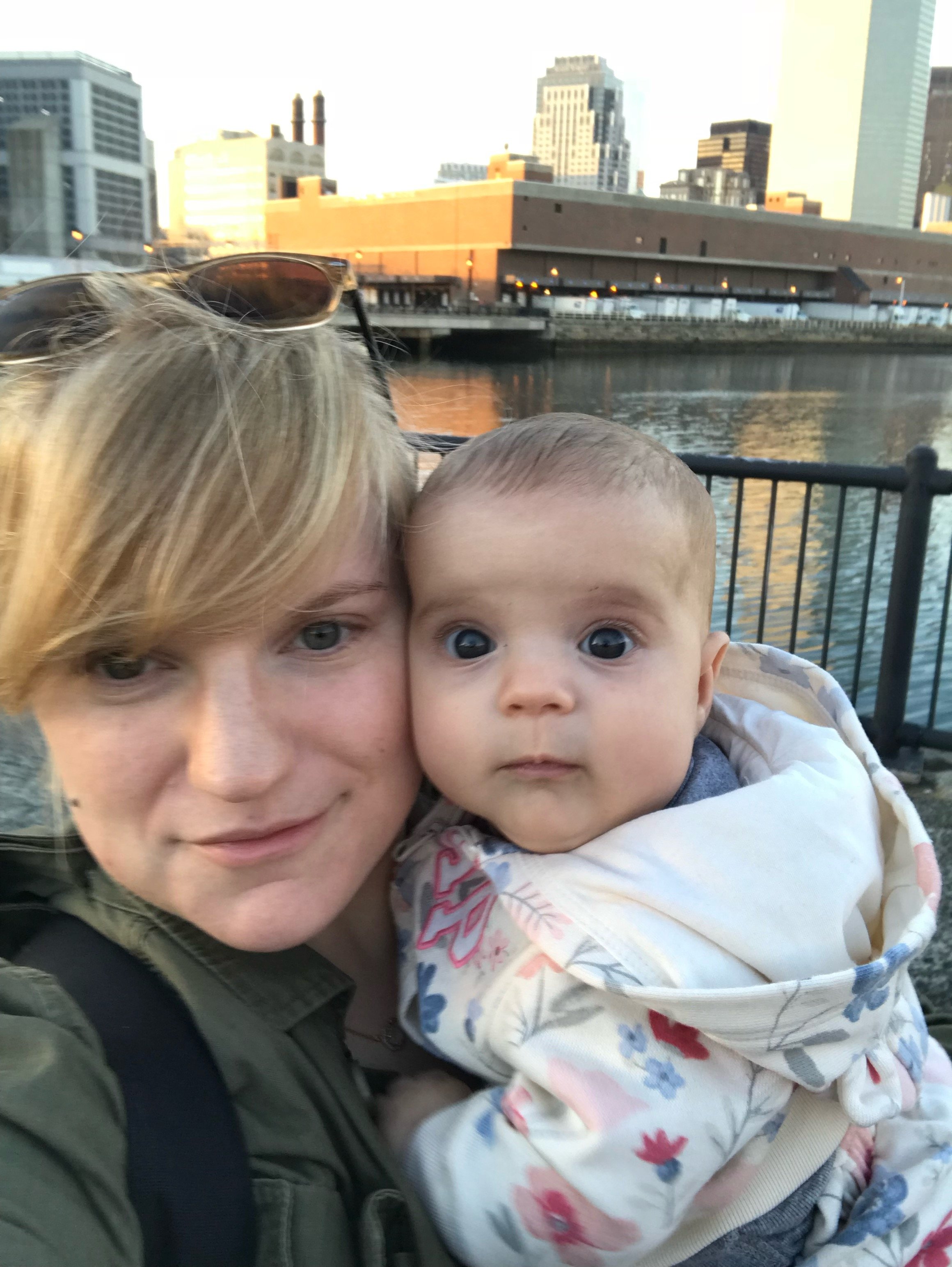
“I suffered from postpartum psychosis 32 years ago. It started during my pregnancy. It was very painful, exhausting and terrifying. I had paranoid thoughts, but not suicidal or homicidal. I thought I was going to prison because I lied on my cv. I had 50 plus friends that supported me but my gp did not recognize the signs and kept brushing it off while my husband was desperately seeking help. I was taken to emergency and they said if she is not suicidal we can’t help you. I was bouncing off the walls and was in full psychosis when I gave birth. I was admitted to the psych ward after birth and my daughter stayed with me in the hospital for a month and then was brought home. I stayed in the hospital for 2.5 months and ultimately had electroshock therapy which lifted this profound weight and dark cloud. I remember waking up from a session and saying to my husband with a big smile “Did I think I was going to prison”? My care in the hospital in Canada was excellent and I had so many friends and family taking care of me. I have been able to be a mother and went on to have a second child. However, I suffer from long term bipolar disorder which is very well controlled by low dose anti-psychotics. I have had a full life and feel grateful everyday that I could be a mother. This illness must be recognized but I understand psychiatry is very tricky and getting the right dose of medication is very difficult and so much is unknown about the brain.”
“I wasn’t sure I wanted to have children when I was growing up but my clock started ticking around 30, I decided I wanted to have a baby. In October 1992 I became pregnant, my son was born on 7/23/1993 which is my birthday also, what a gift! It was not a simple delivery, after 18 hours they had to do an emergency C-section, Tyler’s monitor showed he was in distress. It was extremely difficult to recover from the surgery for me, my husband had an injury during my pregnancy and became disabled and was unable to help much. I did not want to breast feed, it was too difficult with the medication I was on for C-section and I was going to have to return to work within 6 weeks, my job was our only source of income. Other women really made me feel inadequate about this decision even though my doctors supported it. After I went back to work I was exhausted most days and began to feel extremely depressed. I went to my family doctor crying telling him I did not think I was a good mother and if anyone even looked at me it could make me cry for no reason. I explained to him I did not feel like myself, he informed me I had post partum depression, which I had never heard of. He put me on an antidepressant named paxil, and weaned me up to appropriate dose. I was fortunate this worked for me, I informed him that he saved my life!!! After 6 months he slowly weaned me off until I no longer needed it. Post partum depression is very REAL, I lived thru it and survived it. There is so much stigma in regards to mental illness, it is no different than any other illness such as heart, diabetes and cancer, it effects your brain which is part of our body. There is no pulling up the bootstraps and getting thru this. Some people may need medicine like I did, or therapy etc. everyone’s journey is different. It was a long time ago for me but it was extremely scary and I will never forget it.”